


THE ART OF WHITE-GLOVE INSTALLATION | THE HAMPTONS, MANHATTAN & GREENWICH

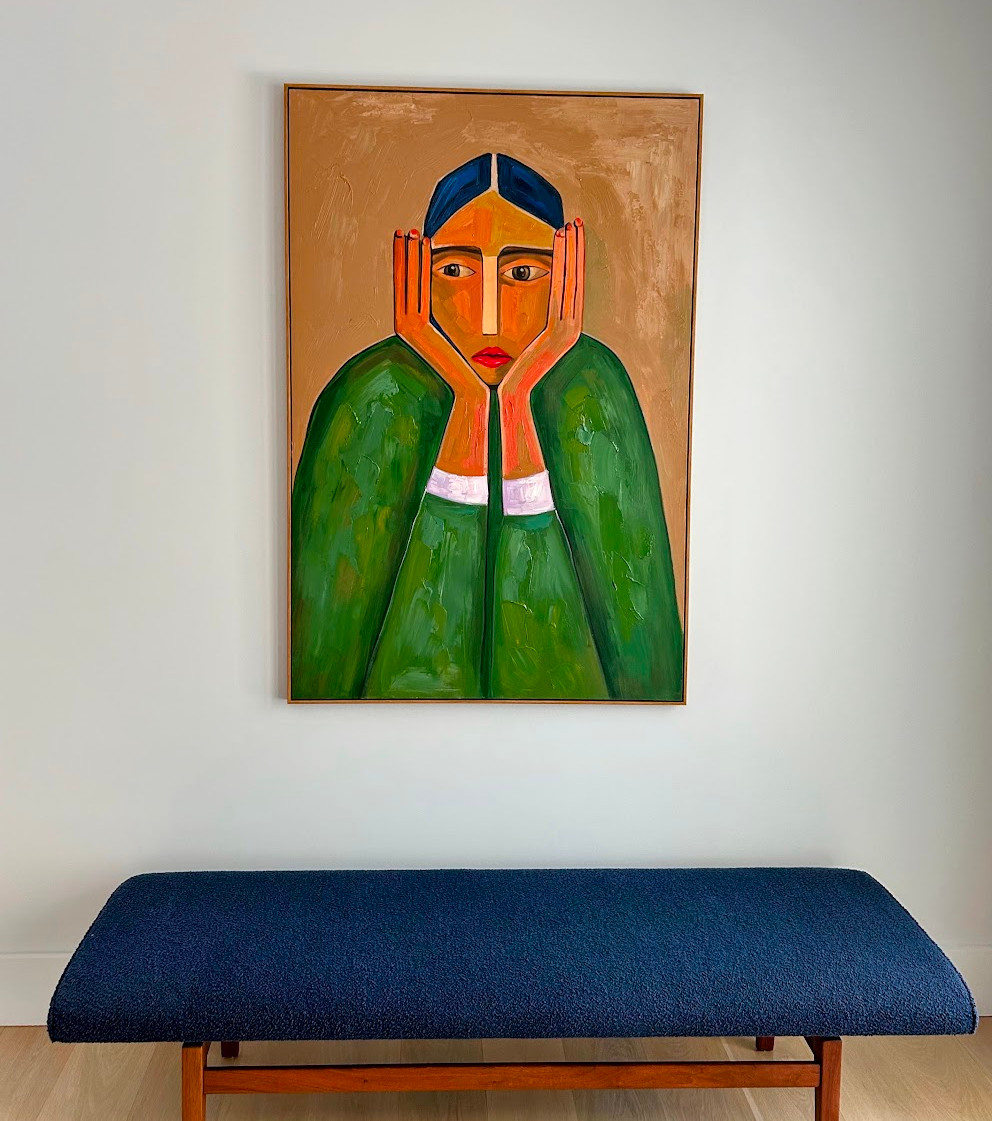
In homes where art, architecture, and interior design have been considered down to the smallest detail, the installation of a painting, photograph, mirror, or sculptural object should never feel like an afterthought.
A beautifully framed work may appear effortless once it is hanging on the wall. Yet behind that apparent simplicity is a series of decisions involving weight, scale, wall construction, hardware, positioning, protection, and handling. The best installations are often the ones in which the technical work disappears completely.
At Smart Sparrow Art Installation, this is the principle behind white-glove art installation.
From private residences in Southampton and East Hampton to Manhattan apartments, Greenwich estates, galleries, designer interiors, and private collections, the objective remains the same: install each piece securely and precisely while protecting both the artwork and the environment around it.
White-glove installation begins before the first hole is made
Professional art installation does not begin with a drill.
It begins with understanding the object.
Before an artwork is mounted, its weight, dimensions, construction, frame, existing hanging system, and center of gravity should all be considered. The wall itself requires the same attention. Drywall, plaster, masonry, brick, wood paneling, stone, and other architectural surfaces require different installation methods.
The hardware is then selected for the actual conditions of the installation rather than simply using whatever happens to be available.
For some pieces, properly installed professional picture hooks may be appropriate. Others may require D-rings, anchors, security hardware, French cleats, Z-clips, or custom mounting solutions.
Choosing the correct system is not simply about whether an artwork can be made to stay on a wall. It is about creating a secure installation with the minimum necessary intervention into the finished surface.
Unnecessary drilling means unnecessary holes. In carefully finished interiors, that matters.
A professional installer should be able to determine where support is actually required, select hardware appropriate for the weight and wall construction, and avoid turning a straightforward installation into a series of exploratory holes.
The wall is part of the installation
In luxury interiors, the surface surrounding an artwork may be almost as carefully considered as the artwork itself.
Hand-finished plaster, custom paint, wallpaper, Venetian plaster, millwork, fabric wall coverings, and specialty finishes can all be difficult or expensive to repair.
That is why even something as simple as making a measurement mark deserves attention.
At Smart Sparrow Art Installation, walls are marked with water-soluble pencil whenever possible. The mark can be removed cleanly once the artwork has been positioned.
Permanent markers and felt-tip pens have no place in this process.
Ink can migrate through certain paints and primers, becoming visible again even after the wall has been repainted. Concealing it may require several coats, additional preparation, or stain-blocking primer.
It is an unnecessary risk created by something that should never have been permanent in the first place.
The smallest decisions during an installation often determine how much work is required after it.
Why aluminum frames and French cleats require extra protection
Metal hardware introduces another frequently overlooked risk.
Aluminum French cleats, metal frames, Z-clips, rails, and similar components can leave dark marks, scratches, or scuffs when they come into contact with a finished wall.
Sometimes the damage is obvious. Sometimes it is little more than a gray line that becomes visible only after the artwork is moved.
Either way, prevention is considerably better than attempting to repair the surface afterward.
During installation, metal components should be handled carefully and protected where appropriate. An additional temporary barrier can be placed between the hardware or frame and the wall while the artwork is being positioned.
The barrier remains only during the installation process and is removed once the piece is securely mounted.
It is a small step, but it protects the wall at exactly the moment when it is most vulnerable.
The same principle applies to frames. Finished wood, lacquer, gilding, polished metal, acrylic, and delicate decorative surfaces should never be allowed to scrape against ladders, hardware, walls, or tools during handling.
White-glove service is ultimately a discipline of eliminating preventable contact.
The installation should respect the entire room
Professional art hanging is not limited to the square footage occupied by the artwork.
The installer is working inside a completed interior.
Floors, furniture, rugs, millwork, lighting, wall treatments, and adjacent objects all form part of the environment that must be protected.
Tools and hardware should be organized rather than scattered across finished surfaces. Frames should never be placed casually against unprotected walls. Ladders and equipment should be positioned with an understanding of both the architecture and the furnishings around them.
When drilling is required, the work should be controlled and the surrounding area protected from unnecessary dust and debris.
The goal is not merely to avoid obvious damage.
The goal is for the room to feel untouched when the installation is finished.
Precision is visual as well as technical
There is also a difference between an artwork that is securely attached to a wall and an artwork that feels correctly installed.
Position changes perception.
A few inches can alter the relationship between a painting and a piece of furniture, affect the balance of an entire wall, or disrupt the rhythm of a group of works.
For a single artwork, the installer must consider scale, sightline, architectural features, furniture, and the proportions of the room.
For gallery walls and multiple-piece installations, spacing becomes even more important. Horizontal and vertical relationships must remain consistent, while the collection should still feel natural rather than mechanically arranged.
Staircases introduce another visual problem entirely. The composition may need to follow the architecture and movement of the stair rather than a conventional horizontal reference line.
Large-format works require consideration of viewing distance and the relationship between the artwork and the volume of the room.
This is where installation becomes less about hanging and more about placement.
Technical precision keeps the artwork secure. Visual precision allows it to belong in the space.
The Hamptons: installation within carefully considered homes
In the Hamptons, art is often integrated into homes where architecture, landscape, furniture, and objects have been developed as a complete composition.
From Southampton and Water Mill to Bridgehampton, Sag Harbor, East Hampton, and Amagansett, residential interiors frequently combine large-scale contemporary art, photography, sculpture, mirrors, and collectible design.
These environments require a particularly restrained approach to installation.
A wall may appear simple but contain a specialized finish. An oversized canvas may need to align precisely with architectural millwork or a fireplace. A gallery wall may sit within an interior where every dimension has already been carefully considered by the designer or architect.
In these spaces, the installer is not adding decoration to an empty room.
The installer is entering an existing design language.
The work should support that language rather than interrupt it.
For professional art installation in the Hamptons, craftsmanship is therefore measured not only by whether an artwork is level, but by how quietly the installation integrates into the finished interior.
Manhattan: precision within complex architecture
Manhattan presents a different set of conditions.
A contemporary apartment in Tribeca may have concrete walls and oversized contemporary art. A prewar residence on the Upper East Side may have delicate plaster, decorative moldings, and historic architectural details. A Chelsea loft may combine masonry, steel, drywall, and irregular surfaces within the same room.
The installation method must adapt accordingly.
In Manhattan, access and logistics can also become part of the installation itself. Building requirements, service elevators, insurance documentation, restricted working hours, loading procedures, and protection requirements may all need to be considered before work begins.
Inside the residence, the same white-glove principles remain essential.
Art installation in Manhattan should feel precise but unobtrusive: correct hardware, careful handling, minimal wall intervention, protection of finished surfaces, and thoughtful placement within the architecture.
Whether the project involves a single artwork or an entire private collection, the quality of the installation should be visible in the final result rather than in traces of the process.
Greenwich, Connecticut: art, architecture, and residential craftsmanship
Greenwich has its own relationship with art and architecture.
The area includes everything from traditional estates and historic residences to highly contemporary homes, particularly throughout Greenwich, Old Greenwich, Riverside, and Cos Cob.
That architectural variety makes professional installation particularly dependent on understanding the individual property.
Older residences may contain plaster walls, original millwork, and architectural surfaces that require a more conservative approach. New construction may incorporate large expanses of stone, specialty wall finishes, custom panels, and contemporary architectural details.
In both cases, the principle is identical.
The installer should understand what is behind and around the artwork before altering the surface.
For art installation in Greenwich, Old Greenwich, Riverside, Cos Cob, and throughout Fairfield County, white-glove service means adapting the installation method to the artwork and architecture rather than forcing every project into the same method.
Why fewer holes often indicate better planning
There is a common misconception that a more secure installation necessarily involves more anchors, more screws, or more holes.
It does not.
Security comes from using the correct hardware, in the correct location, for the correct load and wall construction.
When those decisions are made before drilling begins, the installation can often be both stronger and cleaner.
Professional installers should understand the rated capacity of the hardware they are using, but hardware ratings alone never tell the entire story. The condition of the wall, substrate, fastener placement, load direction, frame construction, and distribution of weight all affect the final installation.
A strong anchor placed incorrectly is not a professional solution.
A carefully selected mounting system supported in the correct location usually is.
The objective should always be maximum security with minimum unnecessary intervention.
White-glove service is defined by what you do not see
Once an artwork is installed, much of the installer’s work disappears.
The measurement marks are gone.
The temporary protection has been removed.
The hardware is concealed.
The wall remains clean.
The frame is untouched.
There are no unnecessary holes surrounding the artwork.
There are no aluminum marks left behind.
There is no trail of dust or evidence of equipment having moved through the room.
What remains is simply the artwork in the position where it belongs.
That absence of evidence is not accidental.
It is the result of preparation.
Installation as the final stage of collecting and interior design
A collector may spend years developing a collection.
A designer may spend months resolving the proportions, materials, lighting, furniture, and architectural details of an interior.
A gallery may carefully frame and prepare an artwork before it reaches the client.
The installation is the final physical step in that entire process.
It should therefore receive the same degree of consideration as everything that came before it.
Professional art hanging is not simply the act of attaching an object to a wall. It is the point where artwork, architecture, engineering, and visual judgment meet.
The best installation respects all four.
The Smart Sparrow Art Installation approach
At Smart Sparrow Art Installation, our approach to professional art installation is based on several simple principles: understand the artwork before handling it; understand the wall before drilling it; select professional hardware appropriate to the actual conditions; protect frames, French cleats, walls, floors, furniture, and surrounding finishes; use removable marking methods; minimize unnecessary holes; and consider the visual relationship between the artwork and the architecture around it.
These details may seem small individually.
Together, they define the difference between simply hanging something and installing it professionally.
From Southampton, Water Mill, Bridgehampton, Sag Harbor, and East Hampton to the Upper East Side, Tribeca, SoHo, Chelsea, and throughout Manhattan, as well as Greenwich, Old Greenwich, Riverside, Cos Cob, and surrounding Fairfield County, Smart Sparrow Art Installation provides professional white-glove art installation with the same objective on every project:
To leave the artwork perfectly positioned and the room exactly as it was found.
Because the highest standard of installation is often revealed by what remains unseen.
The Hamptons | Manhattan | Greenwich, Connecticut


Comments